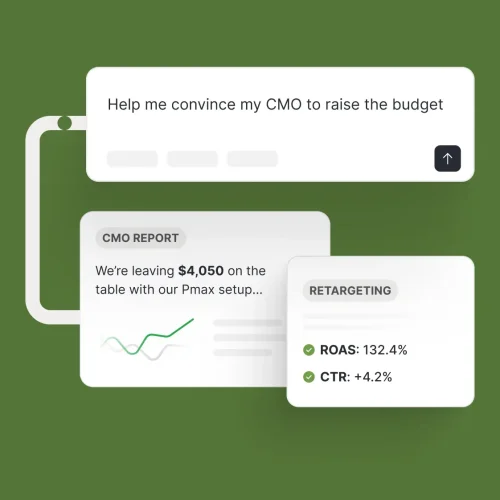
The Brief · Proactive AI agent

Problem

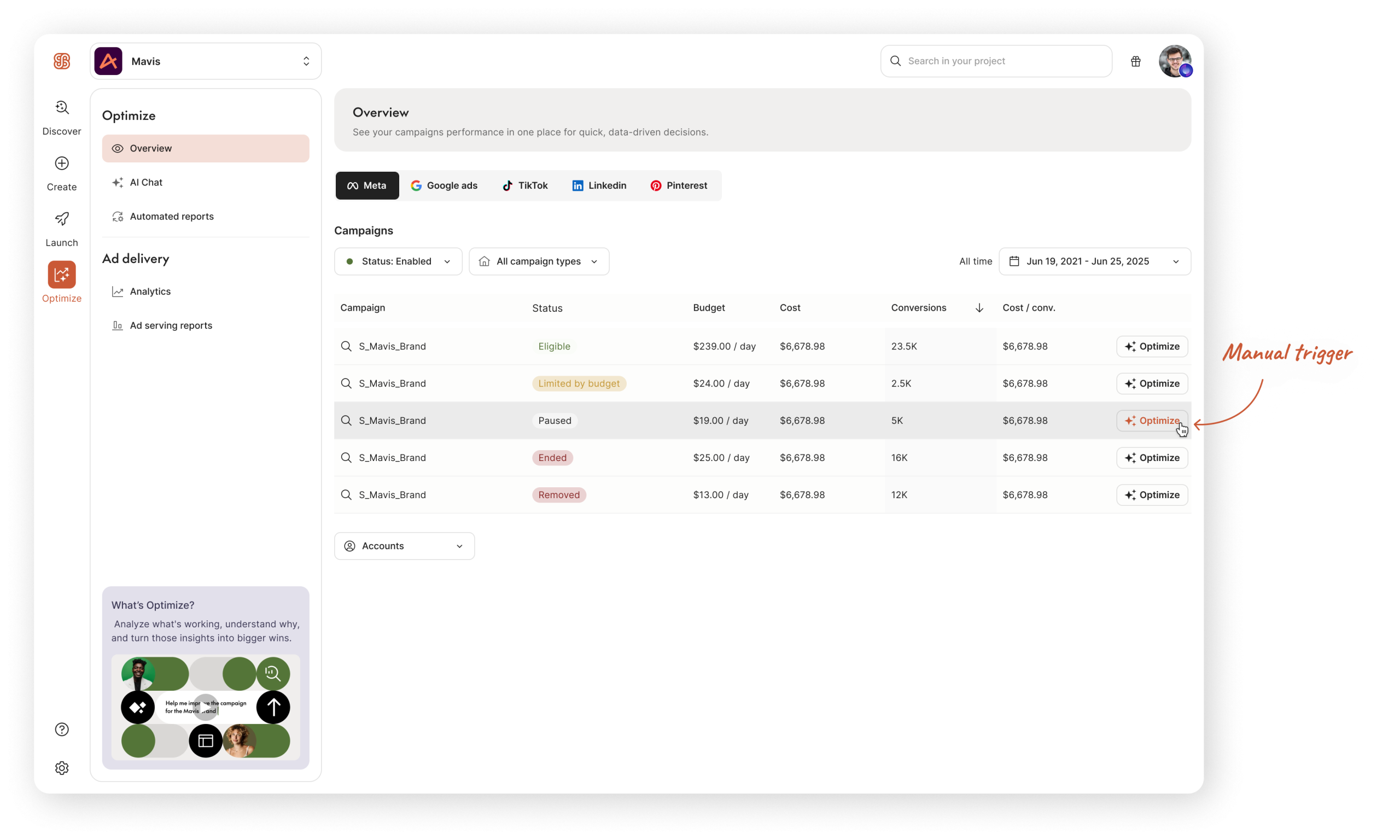
Optimisation in Optimize was reactive and user-driven. Insights required manual triggering, marketing expertise, and interpretation of long-form outputs—often disconnected from daily campaign monitoring.

This meant users were forced to pull insights instead of being guided by the system, making prioritisation difficult and causing high-impact opportunities to surface too late or go unnoticed.

At a system level, Optimize lacked a clear decision-making model: signals, context, and actions were not connected in a way that supported timely, confident optimisation.

My role

I led the end-to-end design of Optimize’s shift from a reactive analysis tool to a proactive, AI-assisted optimization system.

I reframed the problem from “insight generation” to “decision-making”, defined the system-level interaction model, and partnered closely with Product, Engineering, and Data to align AI signals with human workflows.

I owned the UX strategy, interaction patterns, and foundational design principles to ensure the solution was scalable and capable of supporting future AI-driven actions, from recommendations to execution.

Scope & influence
  • End-to-end ownership (discovery → system definition → execution)
  • Cross-functional leadership with Product, Engineering, and Data
  • Platform-level patterns reused beyond a single feature
Challenge

Understanding the limits of reactive optimisation

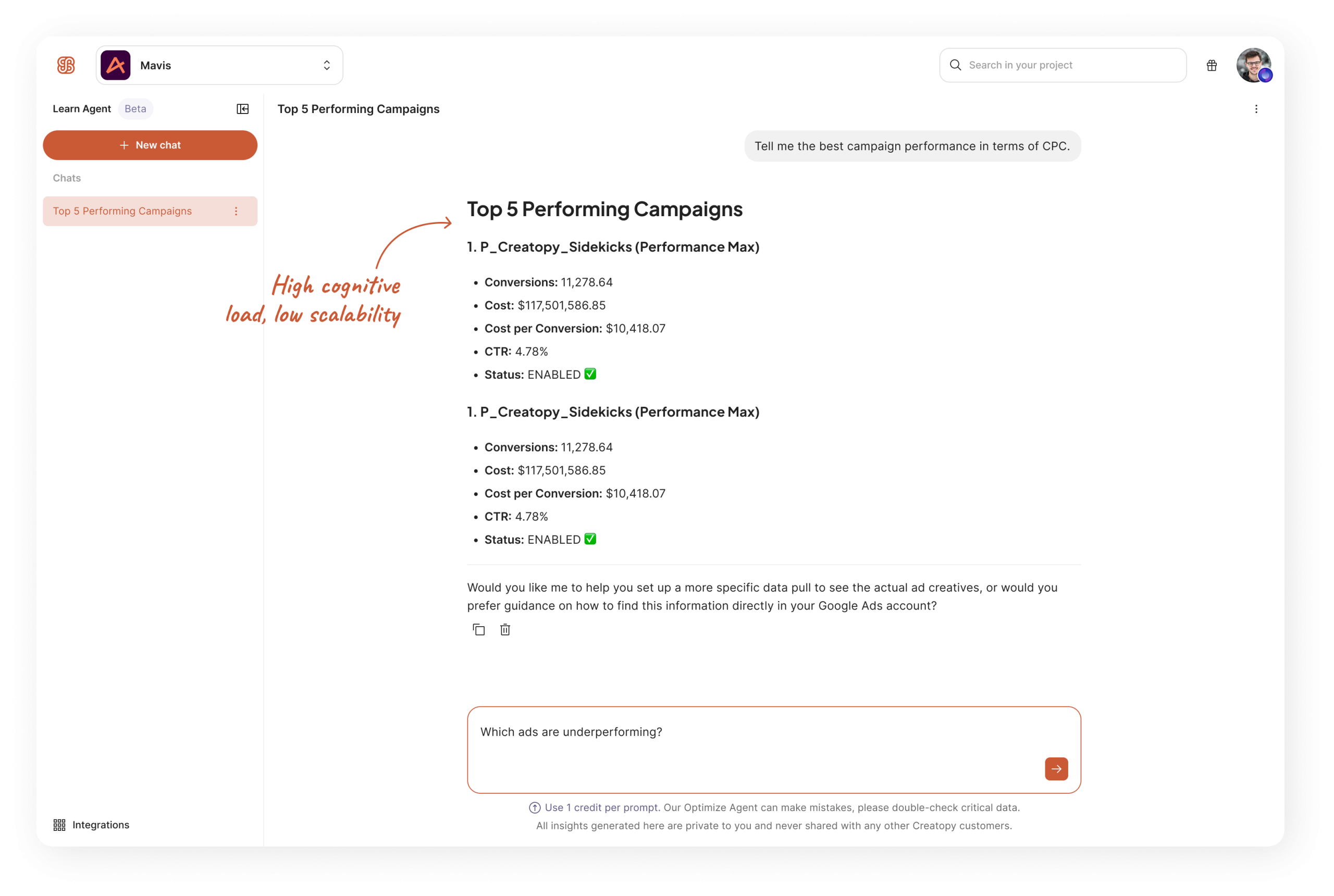
This analysis revealed that the core challenge wasn’t the quality of AI insights, but how optimisation was triggered, delivered, and scaled.

Optimisation relied on manual user actions, required marketing expertise to interpret long-form insights, and often surfaced only after performance had already dropped.

As a result, optimisation was reactive, cognitively demanding, and difficult to scale across multiple campaigns — highlighting the need for a proactive, system-led optimisation model.
Paradigm shift

From reactive optimisation to system-led decisioning

This marked the need for a shift:
from usertriggered optimisationto system-initiated decisioning, where insight timing becomes as critical as insight quality.

System-led optimisation

Optimisation was no longer a matter of better insights, but of better timing and delivery. Relying on users to decide when to act meant insights arrived late, fragmented, or were never used. This marked the need for a shift: from user-triggered optimisation → to system-initiated decisioning.

Designing the proactive optimisation layer

Instead of waiting for users to ask, the system continuously monitors campaign signals and health patterns — detecting risk, opportunity, and performance shifts in real time. Optimisation becomes a persistent layer in the workflow, not a destination users have to actively reach.
  • Always on
  • Always evaluating
  • Always prioritising what matters next
Designing the proactive optimisation
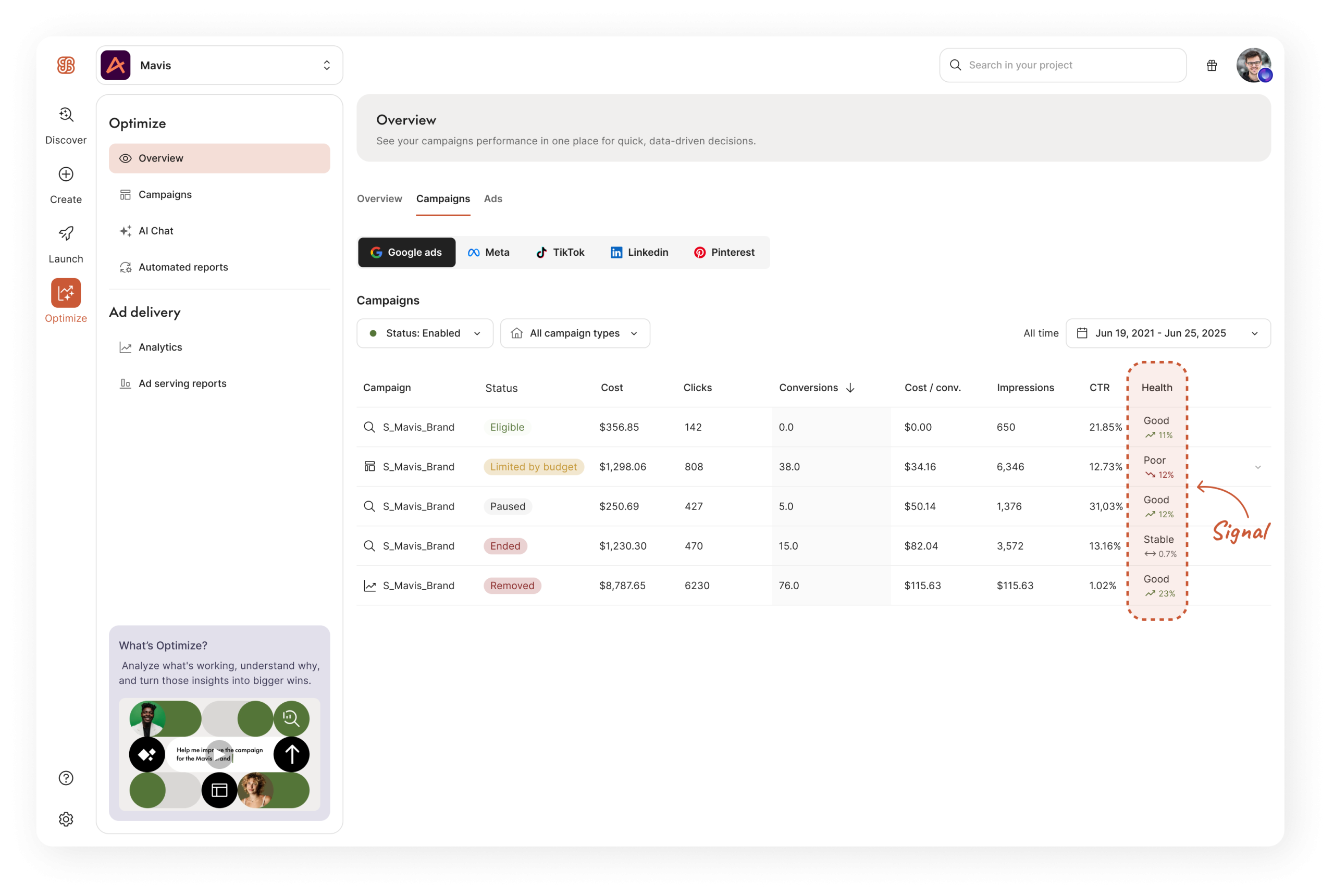
Attention

Campaign health as the primary signal

Insights are no longer buried in data or long conversations.

They surface at the right moment, prioritised by expected impact.

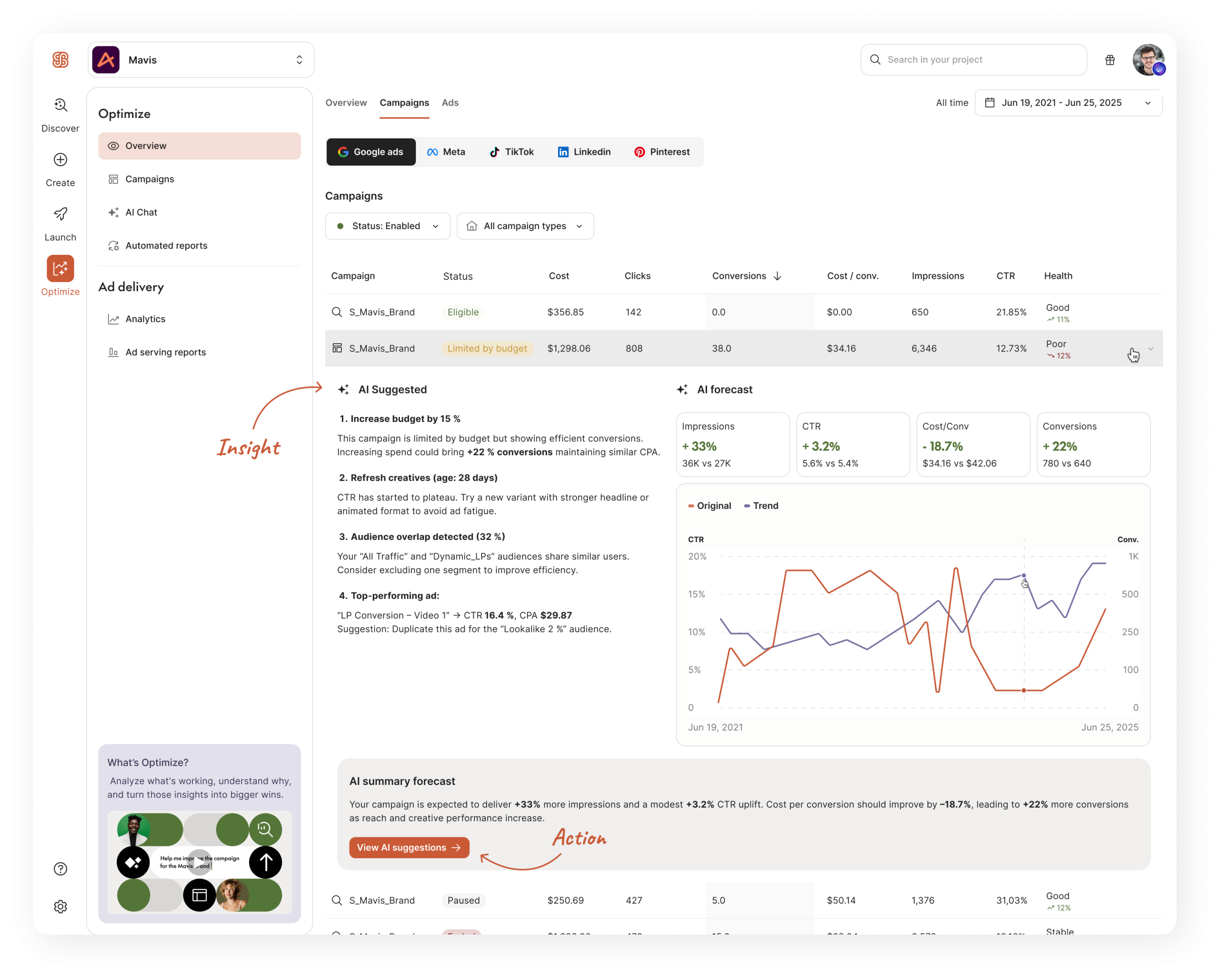
Suggestions shift from narrative explanations to decision support:

  • What’s happening — and why it matters

  • What to change — grounded in signals

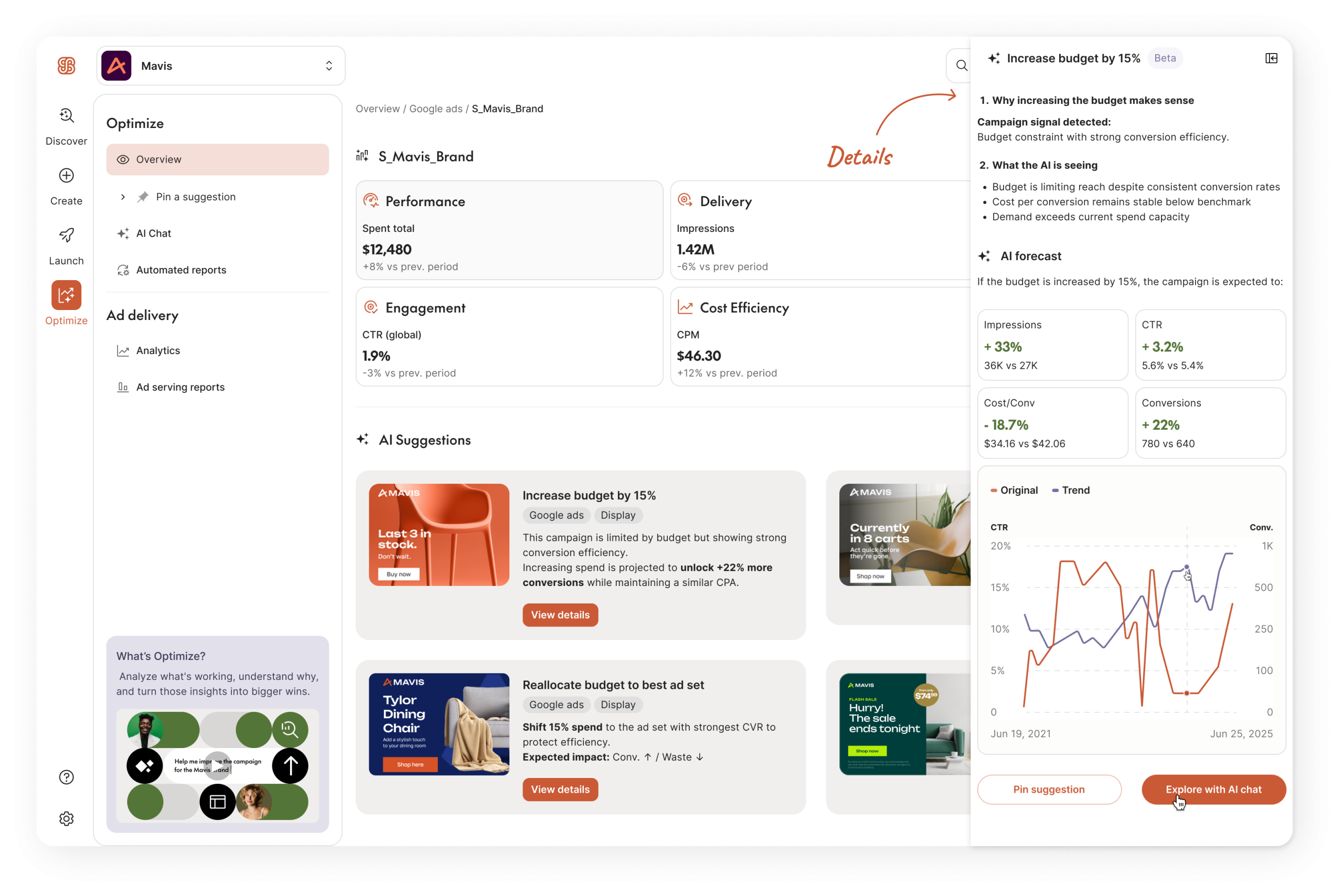
  • What to expect — quantified before acting

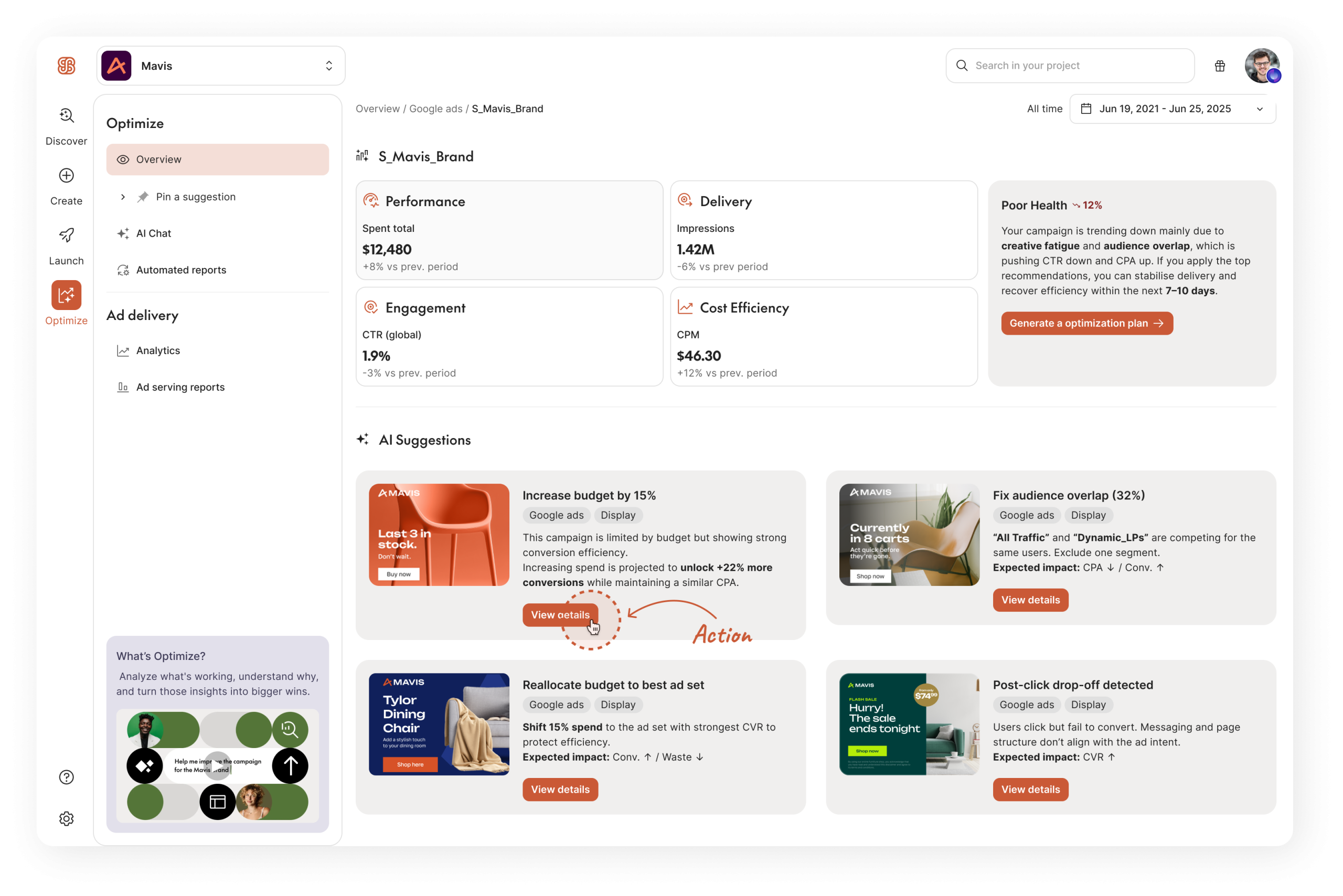
Rather than forcing immediate execution, teams can pin suggestions to maintain visibility and build a focused optimisation backlog — balancing global awareness with campaign-level action.

Suggestion → Decision

AI-driven optimisation, surfaced when it matters

The system continuously monitors campaign health and proactively surfaces high-impact opportunities — removing the need for manual triggers or expert interpretation.

Health signals provide immediate visibility, while AI Suggestions translate performance data into prioritised, actionable decisions. Each suggestion includes context, rationale, and expected impact, and can be pinned to support planning and collaboration over time.

Optimisation becomes continuous, proactive, and system-led.

Design principles

Guiding the solution

System over user initiative

Optimisation should be triggered by system signals, not user intent.

Global visibility, focused action

Users need a high-level health overview with the ability to drill down only when necessary.

Signals before narratives

Insights must be structured, scannable, and prioritised by impact.

Decision support before execution

AI should help users assess confidence and risk before acting, not push immediate changes.
Goals

What this unlocks

What this enables

This new optimisation model unlocks a shift from manual, reactive analysis to continuous, system-led decision-making.

It creates a foundation for:

  • Earlier detection of performance risks

  • Consistent optimisation across accounts and campaigns

  • Reduced reliance on individual marketing expertise

  • Future AI-driven actions, from recommendations to direct execution

Next steps

Roadmap

The current iteration focuses on insight quality, prioritisation, and interaction patterns.

Upcoming phases include:

0
Validating signal accuracy and trust with live campaigns
0
Testing suggestion clarity and decision confidence with marketers
0
Gradual rollout of AI-assisted execution and automation
Let’s Collaborate

Designing products that perform.

Back