Genially · Real-time Collab

Problem

As Genially scaled, real-time collaboration shifted from a feature problem to a platform-level reliability and trust challenge.

Multiple users editing the same content at the same time led to:

• Conflicts between simultaneous edits
• Lack of visibility about who was doing what
• Uncertainty during uploads and shared actions
• Reduced confidence in collaborative sessions

My role

I led the end-to-end UX definition of real-time collaboration, from problem scoping and interaction design to prototyping, testing, and handoff.
I partnered closely with Product and Engineering to align on system constraints and edge cases, ensuring the experience worked reliably under real-world concurrency scenarios.
  • End-to-end ownership of real-time collaboration UX, from problem framing to platform-level delivery
  • Defined the collaboration model adopted across multiple surfaces, beyond a single feature
  • Established design patterns that scaled with concurrency and usage growth
  • Raised platform reliability and user trust in high-density, multi-user editing scenarios
Challenges

Analysing the current experience

The existing collaboration experience didn’t scale to support real-time, simultaneous editing—especially in high-density scenarios with multiple active users.

As Genially grew, collaborative sessions became harder to trust: users lacked visibility into who was doing what, whether actions were still in progress, and if the system was in a stable state.

Key issues identified:

  • No clear visibility of user presence or activity
  • Overlapping actions without real-time feedback
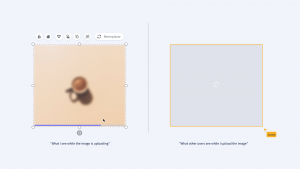
  • Upload and processing states lacked transparency
  • Increased cognitive load during collaborative editing
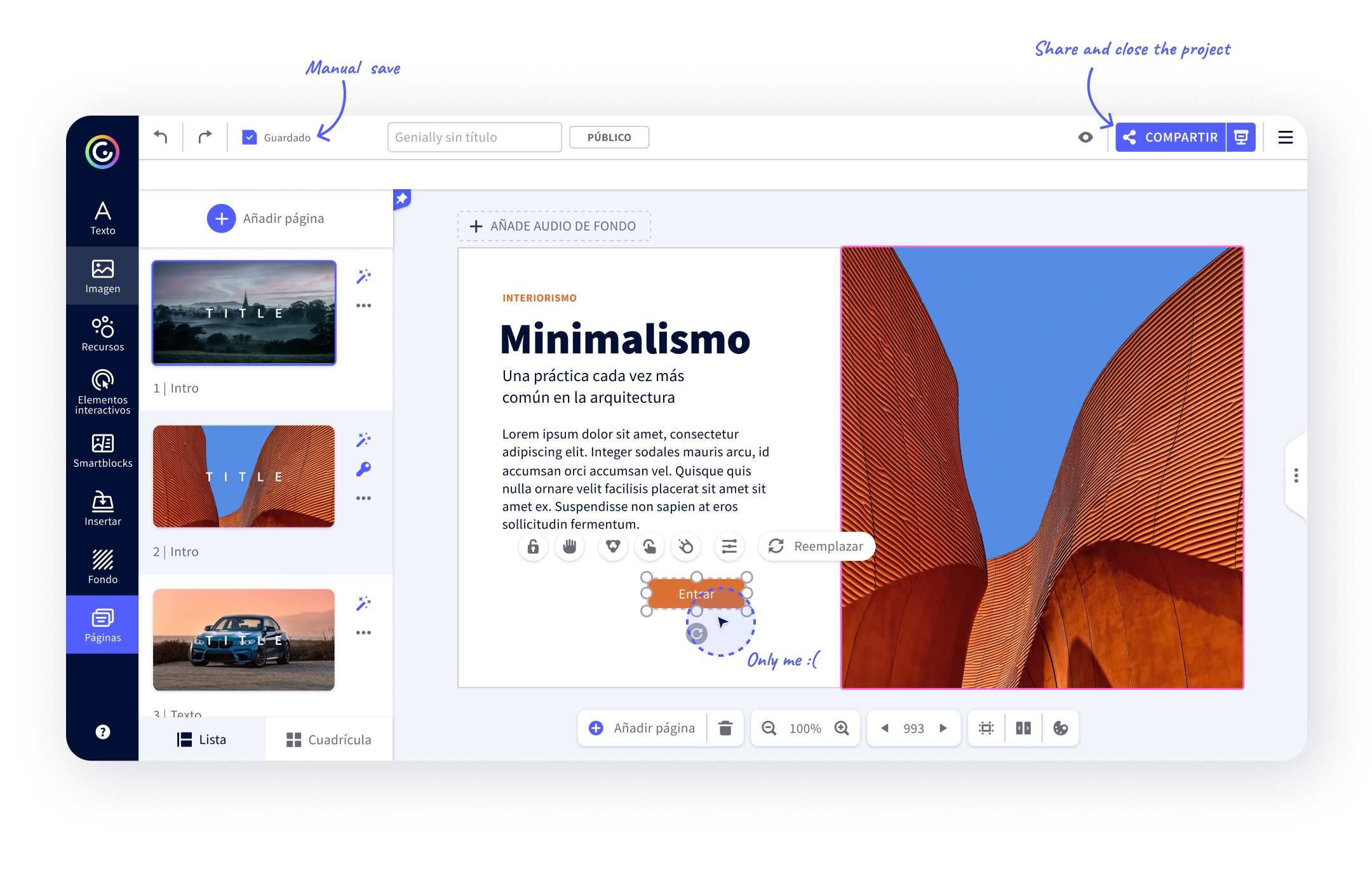
Before
From single-user editing to real-time collaboration
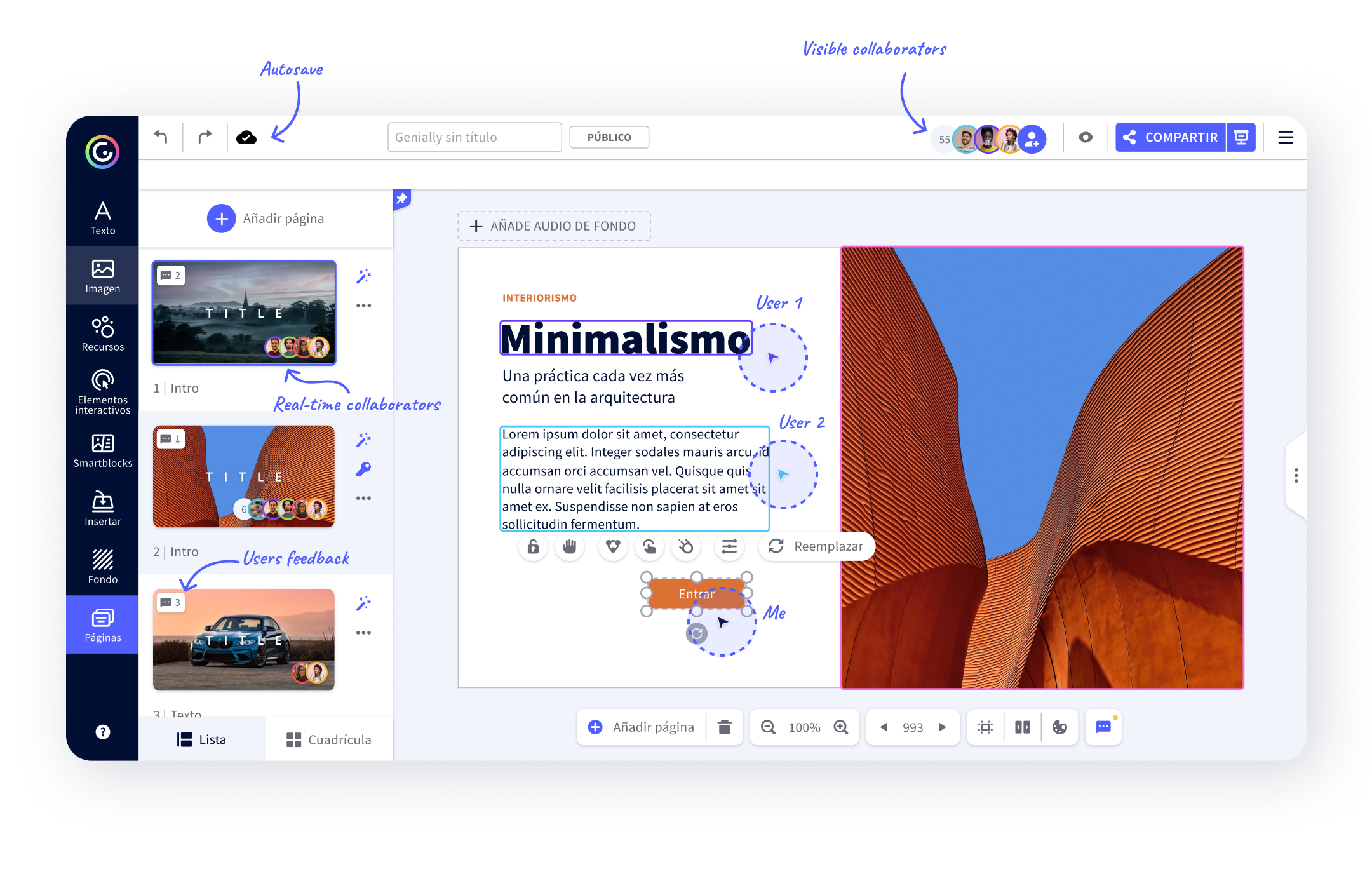
After
The experience evolved from isolated actions to a shared, real-time collaborative workflow.
Before After

The shift from isolated actions to shared feedback reduced uncertainty and enabled confident real-time collaboration.

System-level interaction rules

Design patterns for real-time collaboration

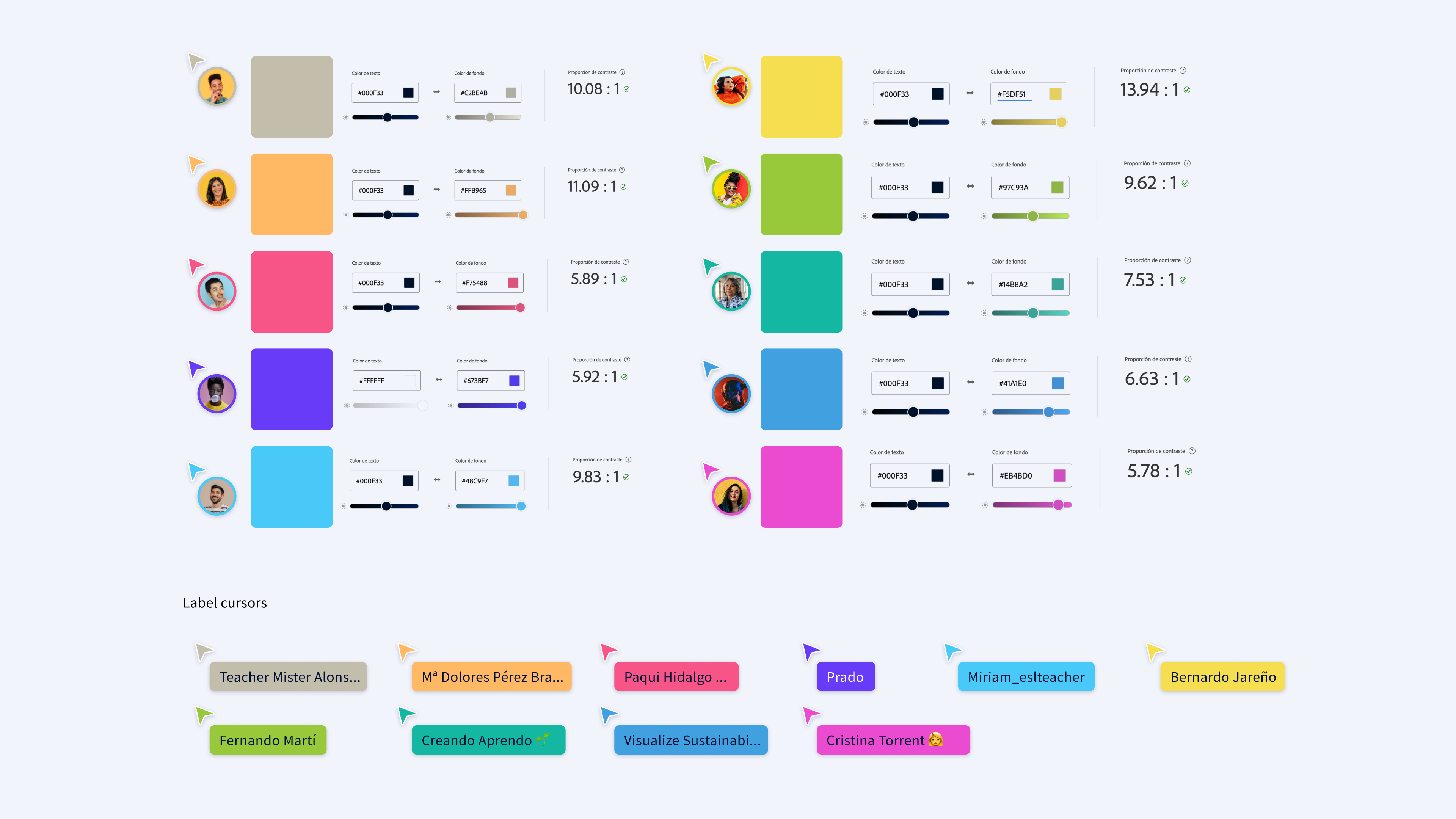
We defined a set of platform-level patterns to ensure clarity, trust, and predictability in high-concurrency editing scenarios.

Key patterns:

  1. Live presence — cursors, labels, and selection states clarify who is acting.

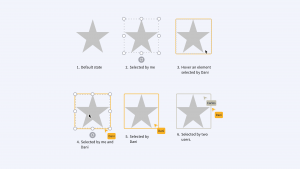
  2. Shared object states — predictable behavior when multiple users interact.

  3. Upload transparency — clear feedback during async actions.

These patterns reduced conflicts and enabled predictable, trustworthy collaboration in high-density sessions.
Commenting & Review

In-context feedback and approval

We designed in-context feedback and approval to keep collaboration tied to the canvas, reducing context switching and ambiguity in shared decisions.

Feedback is anchored to specific elements, clearly attributed, and easy to resolve supporting fast alignment without interrupting the editing flow.
Collaboration

Real-time co-editing with clear ownership

We designed real-time co-editing around clear ownership, making it explicit who controls changes and when actions are in progress.

By surfacing editor attribution, ownership states, and in-flight actions, the system prevents conflicts and enables confident parallel work in high-concurrency scenarios.

Testing & Iteration

User test

User testing in real-time scenarios

I validated the real-time collaboration model through targeted user tests in high-concurrency scenarios.

Sessions focused on simultaneous edits, parallel uploads, and inactive participants to stress system awareness and trust.

Iterative adjustments based on feedback


Testing revealed inactivity as a primary source of confusion in dense collaborative sessions.

I iterated on inactivity handling with progressive fade-outs and soft system signals to reduce noise while preserving awareness.

Key Lernings

  • Most collaboration issues surfaced in high-concurrency, multi-user scenarios
  • Clear, system-level visual feedback increased user confidence
  • Explicit inactivity handling reduced ambiguity and improved focus
Iteration / After testing

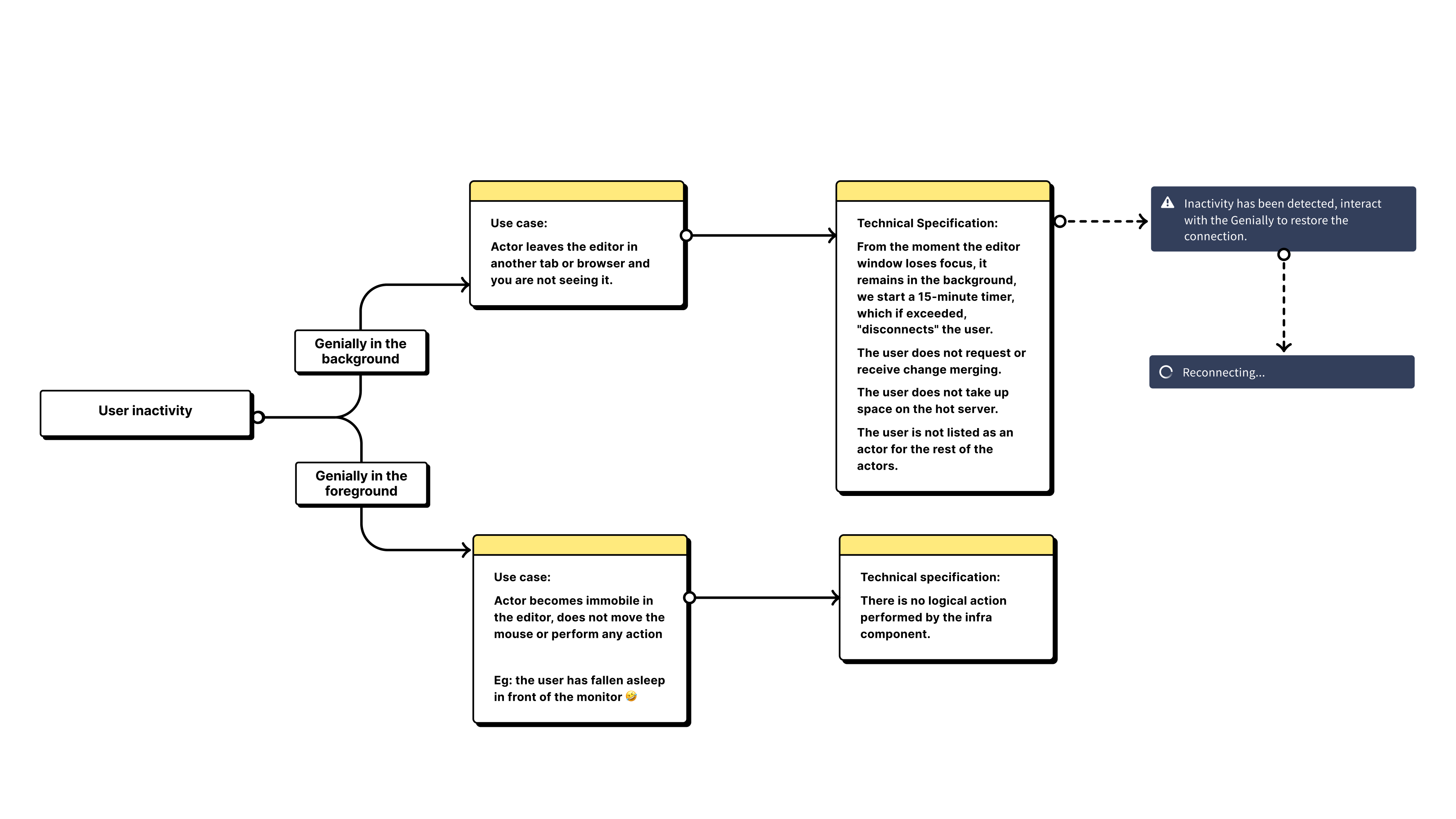
Inactivity detection

During user testing, we observed a recurring breakdown in trust when collaborators became inactive without clear system feedback.

Participants were unsure whether an editor had intentionally stopped, lost connection, or was still holding control—leading to hesitation, duplicated actions, or unnecessary interruptions.

What we added:

  • Inactivity detection signals to infer disengagement over time

  • Clear visual state changes when an editor becomes inactive

  • Graceful ownership release to unblock collaboration without manual intervention

This iteration closed a critical trust gap that only surfaced under real usage, reinforcing the system’s reliability in long-running, high-concurrency sessions.

Statistics

Impact by the numbers

Key indicators based on early adoption and qualitative user feedback.

0 %
Clarity &
presence feedback

Live presence indicators and selection states significantly improved users’ understanding of who was doing what, in real time.

0 %
Editing
conflicts reduced

Clear ownership signals and shared object states reduced accidental overlaps and conflicting edits.

0 %
Upload objects
transparency

Explicit progress and system feedback reduced uncertainty during async uploads and background actions

Strategic learnings

What this project taught us

01.

Clarity is critical in multi-user environments

Real-time collaboration only works when users can instantly understand who is acting, what is happening, and what state the system is in.

03.

Design must reflect live complexity

Simulating real concurrency early revealed edge cases invisible in static flows—and shaped more resilient interaction models.

02.

Inclusive design improves the experience for everyone

Accessible colour, iconography, and spacing reduced friction and made collaboration more intuitive across skill levels.

04.

Proactive feedback builds trust

Presence indicators, progress signals, and previews helped users stay confident and in control during live collaboration.

Let’s Collaborate

Designing products that perform.

Back